
City life in Nigeria keeps expanding, pushing more people toward homes built close together. Because so many folks need places to live, using land well has become key. One path that stands out? Stacking units smartly instead of spreading wide. Plots sized 450 square meters, even up to 650, now host compact multi-unit setups. These arrangements pull better value than single standalone houses. Atima – a design team shaping how these buildings look and work. They craft linked structures made for local tastes, weather, and budgets. Their plans help owners earn steadily without wasting space. Change is happening quietly, brick by thoughtful brick.
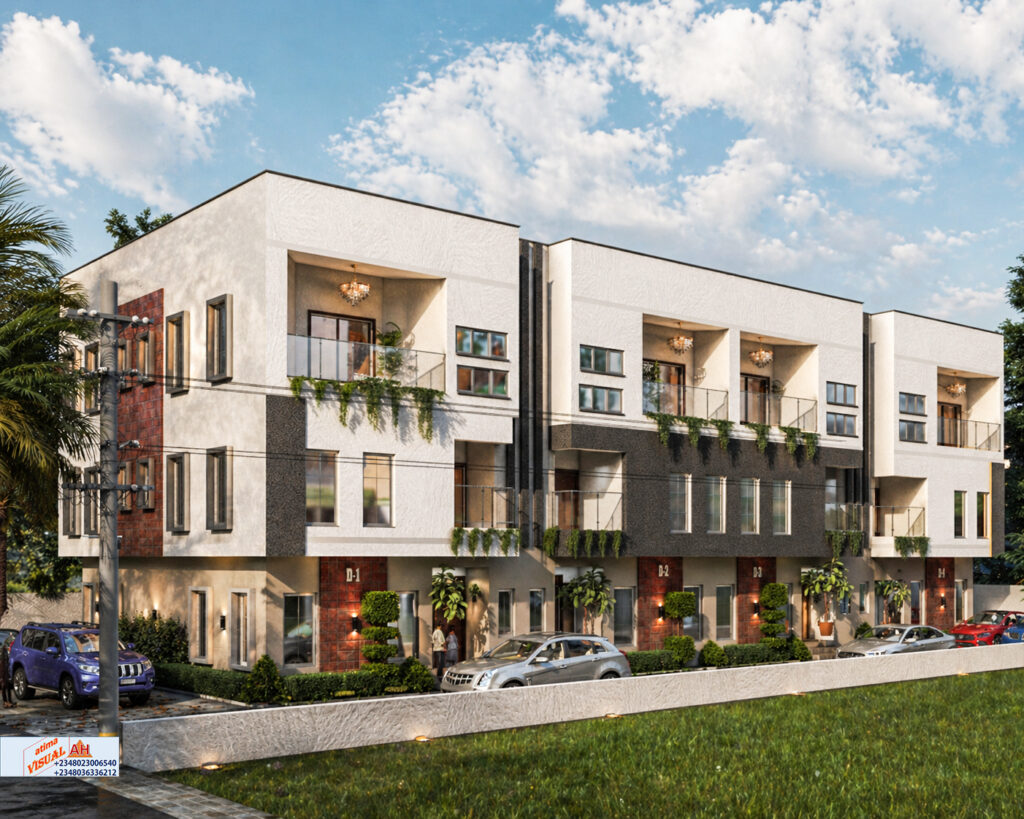
This piece looks into Atima’s terrace building concepts – how they let investors make the most of available plots, lower exposure to setbacks, while reaching lasting results with strong yields. Designs shift with terrain, ideas grow from site specifics, outcomes tie closely to local patterns. Thought flows through structure, space responds to context, materials follow purpose without excess. Each project balances cost awareness with long-term function, shaping homes that adapt rather than resist. Insight comes not just from planning but from watching how people move, live, stay. Returns build quietly, steadily, rooted in fit – not flash.
How Terraces Are Built in Nigeria
One after another, these connected homes stand side by side – each built separately yet joined by shared walls. Found across places such as Lagos, Abuja, Port Harcourt, and Ibadan, they’ve become a go-to choice simply because they cost less, make smart use of limited land, while still feeling like private residences.
On a single piece of land, terrace homes stack several living spaces where regular double houses would take up room for just one family. Because of this setup, they fit well in crowded areas needing efficient use of space
- Rental income generation
- Property flipping
- Short-let or Airbnb investments
- Cooperative housing schemes
Smart terrace layouts shape Atima’s approach, matching city trends with what backers care about most. Modern touches emerge where planning meets real demand, quietly guiding each decision forward.
Terrace Developments Offer Long Term Value Through Location And Design
1. Maximum Land Utilization
A single piece of land in Nigeria might fit several terrace homes, based on how well the layout works. Picture a 600sqm space holding between four and six duplex units, each with three or four bedrooms, without feeling tight.
Every bit of space gets fine-tuned by Atima, yet still looks good and works well. Though design matters, function never takes a back seat when efficiency steps in. Even small areas feel right – shaped carefully, not crowded.
2. High ROI
One duplex might bring steady rent, yet splitting the space into separate units often brings more. Each small unit rents individually, adding up faster than one large lease. More tenants mean more monthly payouts, sometimes doubling returns. Selling later could also fetch a higher price when each unit has its own history of income.
3. Reduced Construction Costs
One unit leaning on another means fewer supplies, less work. Because of that, Atima builds smart without skimping on quality inside. Walls doing double duty cut down waste. Inside stays sharp even when budgets tighten.
4. High Market Demand
People in the middle and upper-middle brackets often look for value that still feels high-end – terrace houses fit that need well. Because of this, finding renters or buyers tends to go smoothly.
5. Scalable Development Model
Building a terrace might happen step by step, shaped by how much money is ready at each point.
Atima supports investor goals
What if your next project had a clear path from sketch to sale? Atima shapes spaces with purpose, guiding property investors through every phase. Ideas become buildings that work – designed to deliver returns, not just aesthetics. Each decision ties back to value, from first lines on paper to final construction details.
1. Site Analysis and Feasibility Study
Before any design begins, Atima evaluates the land:
- Plot size and shape
- Soil condition
- Accessibility
- Zoning regulations
- Market demand in the location
Because of this, the terrace layout fits rules while still making money. The plan follows local codes yet keeps costs low enough to earn a return. Rules are met without sacrificing income potential from the start. Even with restrictions, profit stays possible thanks to careful setup. Staying within guidelines does not block financial success here.
2. Smart Architectural Planning
Comfort stays high even when rooms multiply within tight footprints. Atima shapes compact designs where each unit feels separate, lives well. More homes fit without crowding personal space. Clever spacing allows closeness minus compromise. Each layout uses square footage like a puzzle solved quietly.
Key features include:
- Functional room arrangements
- Cross ventilation and natural lighting
- Parking optimization
- Private entrances for each unit
- Compact yet luxurious layouts
Each layout fits the buyer’s financial plan along with where they want to sell. A custom touch shapes every detail based on spending limits plus audience needs.
3. Modern 3D Visualization
Outcomes aren’t guesswork here. Atima builds clear 3D views showing exactly what’s possible
- Exterior aesthetics
- Interior layouts
- Landscaping concepts
- Lighting and material finishes
Finding clear details lets buyers choose wisely – while giving developers an edge when selling properties before they’re built.
4. Cost Optimization and Budget Planning
Costs often spiral out of reach on Nigerian building projects. That’s where Atima steps in – guiding investors through smarter financial oversight
- Prepare accurate cost estimates
- Select cost-effective materials
- Avoid unnecessary design complexities
- Plan phased construction
Built-in checks keep money matters steady through every phase. Success hinges on consistent tracking right from day one.
5. Approval Drawings and Documentation
Finding your way through construction permits in Nigeria often feels like a maze. Atima takes care of it, smoothing each step without fuss
- Architectural drawings
- Structural drawings
- Mechanical and electrical layouts
- Submission for government approvals
Skipping extra steps keeps things moving for investors. Costly holdups? They just fade away.
6. Construction Supervision
When it comes to getting the look right, Atima steps in with hands-on oversight. Execution stays on track because expert eyes guide each phase. Mistakes fade into the background since careful monitoring takes place. The vision remains intact, thanks to consistent check-ins and real-time adjustments. Clarity grows as decisions align with original plans. Quality holds steady when experience shapes every detail
- Quality control
- Meeting the outlined design requirements
- Coordination with contractors
- Timeline management
Because of this, what gets built lines up exactly with the original goal and worth it was meant to hold.